
-
Premium Whey 2 kg | Natly
Vendor:NatlyRegular price 67,90€Sale price 67,90€ Regular priceUnit price per -
Premium Whey 1 kg | Natly
Vendor:NatlyRegular price 37,90€Sale price 37,90€ Regular priceUnit price per -
IsoPrime CFM Isolate 500 g | Amix
Vendor:AmixRegular price 39,90€Sale price 39,90€ Regular priceUnit price per -
Whey 2 kg | Life Pro
Vendor:Life ProRegular price 79,90€Sale price 79,90€ Regular priceUnit price per -
IsoPrime CFM Isolate 2 kg | Amix
Vendor:AmixRegular price 128,90€Sale price 128,90€ Regular priceUnit price per -
IsoPrime CFM Isolate 1 kg | Amix
Vendor:AmixRegular price 72,90€Sale price 72,90€ Regular priceUnit price per -
Ultra Pure Whey 500 g | Amix
Vendor:AmixRegular price 29,90€Sale price 29,90€ Regular priceUnit price per -
Whey Professional 2.0 2 kg | Scientiffic Nutrition
Vendor:Scientiffic NutritionRegular price 89,90€Sale price 89,90€ Regular priceUnit price per -
Whey 1 kg | Life Pro
Vendor:Life ProRegular price 44,90€Sale price 44,90€ Regular priceUnit price per -
Premium ISO90 Whey Isolate 1 kg | Natly
Vendor:NatlyRegular price 49,90€Sale price 49,90€ Regular priceUnit price per -
Whey Professional 2.0 908 g | Scientiffic Nutrition
Vendor:Scientiffic NutritionRegular price 46,90€Sale price 46,90€ Regular priceUnit price per -
Isolat 2.0 2 kg | Scientiffic Nutrition
Vendor:Scientiffic NutritionRegular price From 89,90€Sale price From 89,90€ Regular priceUnit price per109,90€18% -
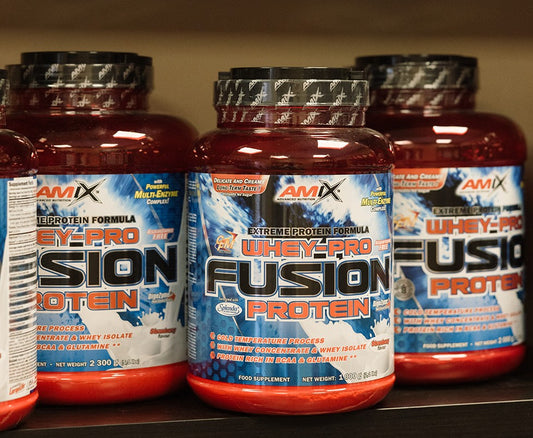
Whey Pro Fusion Protein 2 kg | Amix
Vendor:AmixRegular price 109,90€Sale price 109,90€ Regular priceUnit price per -
Isolat 2.0 908 g | Scientiffic Nutrition
Vendor:Scientiffic NutritionRegular price 61,90€Sale price 61,90€ Regular priceUnit price per -
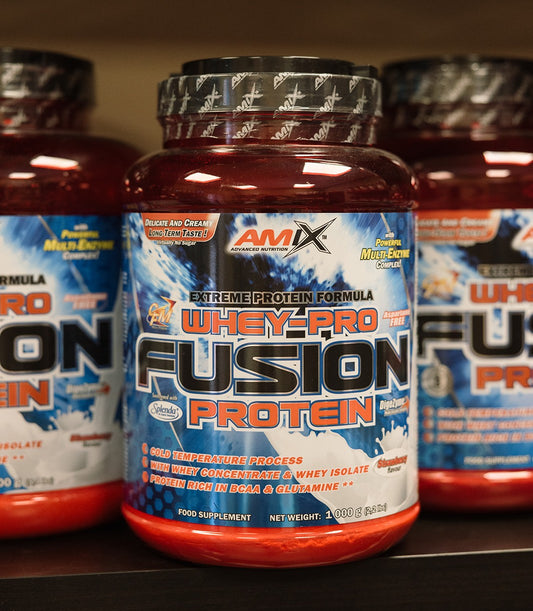
Whey Pro Fusion Protein 1 kg | Amix
Vendor:AmixRegular price 59,90€Sale price 59,90€ Regular priceUnit price per -
Isolat 2.0 Single Serving 30 g | Scientiffic Nutrition
Vendor:Scientiffic NutritionRegular price 2,99€Sale price 2,99€ Regular priceUnit price per -
Isolate Vegan Creamy 1 kg | Life Pro
Vendor:Life ProRegular price 28,90€Sale price 28,90€ Regular priceUnit price per -
Isolate Zero 800 g | Life Pro
Vendor:Life ProRegular price 59,90€Sale price 59,90€ Regular priceUnit price per -
Ultra Pure Whey 1 kg | Amix
Vendor:AmixRegular price 55,90€Sale price 55,90€ Regular priceUnit price per -
Premium ISO90 Whey Isolate 2 kg | Natly
Vendor:NatlyRegular price 89,90€Sale price 89,90€ Regular priceUnit price per






Frequently asked questions
What is protein powder for? Do I really need it?
Protein powder helps you cover your daily protein needs quickly, conveniently and affordably.
And it does so with a protein no other beats.
Whey protein has the highest biological value of any food. Biological value indicates how much of the protein you take your body actually uses. Egg has always been the reference, with a value of 100. Whey reaches 104.
Each serving provides between 20 and 30 grams of protein. No cooking, no sitting down to eat and no washing up afterwards.
Do you need it? Only you can answer that.
It's for you if:
- You want to nourish your body with the highest-quality protein there is.
- You're looking for the cleanest possible protein, with hardly any carbs or fat, to feed your muscles after training and contribute to a growth in muscle mass.
- You need to complete your meals in minutes, even on your busiest days.
- Taste matters to you: the best brands have achieved textures and flavours that were unthinkable a few years ago.
- You're looking for something light: few calories, gluten-free and, in the case of isolates, practically lactose-free.
- You value a product that keeps for months once opened, with no need for refrigeration.
It's not for you if:
- You're one of those who say they cover everything with food, without ever having calculated how much protein you eat a day.
- You live like a Shaolin monk: you rise at dawn, meditate, train and still have time to cook, weigh and calmly prepare each of your meals. Without ever looking at the clock.
How much protein do I need a day?
If you've got this far, we'll assume you're an athlete or on your way to becoming one.
For athletes, the recommendation is between 1.6 and 2.3 grams of protein per kilo of body weight a day.
Where you fall in that range depends on your goal, your daily energy expenditure and your physical activity.
- If you're losing weight, aim for the upper end. On a calorie-restricted diet, a high protein intake contributes to the maintenance of muscle mass.
- If you're building muscle, you don't need to go so high. Since you're eating more calories, the lower end of the range is usually enough.
If you don't know where to start, 2 grams per kilo is a good middle point.
A 70-kilo person, for example, would need about 140 grams of protein a day.
Whey concentrate or isolate: which should I choose?
Both are whey protein. The difference is how much it's filtered. Isolate goes through an extra process that removes almost all the fat and lactose.
Choose a concentrate (whey) if:
- You're starting out.
- You want to cover your daily protein intake well.
- You're in a muscle-building phase.
Choose an isolate if:
- You have digestive intolerances, especially to lactose.
- Your goal is fat or weight loss.
- You follow a low-carb or low-fat diet. Isolate contains practically only protein.
And hydrolysed?
We hardly ever recommend it.
It's a protein that comes pre-digested and is absorbed faster. But the hydrolysis process makes it very bitter, and taking it can become a much bigger sacrifice than taking an isolate and, above all, a concentrate.
Which protein do you recommend to start with?
We usually recommend a whey concentrate, as it's better priced and needs less processing.
It's true that it contains a bit more fat and sugar, and therefore lactose too. But for someone starting out, who doesn't need to be so precise, that's not usually a problem.
What's more, that small amount of fat and sugar gives it a creamier texture and a richer, more pleasant taste than an isolate, and much more so than a hydrolysate.
That's why it's the best way to get started with protein.
The exception: if you're lactose intolerant, an isolate or a vegan protein is better. We explain below.
When is the best time to take protein? Does the anabolic window exist?
The best time is after training.
Training causes small tears in the muscle fibres, and protein provides the amino acids the muscle needs to repair them.
For years people talked about an “anabolic window” of barely 30 minutes in which you absolutely had to take it. Today we know that window is much wider. What really makes the difference is reaching your daily protein.
On days you don't train, you can take it at breakfast, mid-morning or mid-afternoon, especially if those meals aren't very high in protein.
And two important points:
- Protein complements your meals; it never replaces them.
- If you're going to have a main meal right after training, that's not the best time to take it. It would reduce your appetite for that meal, which is more important: as well as protein, it gives you the rest of the nutrients you need.
Does protein make you fat?
Not on its own.
A serving of protein provides roughly 120 to 180 calories. That's between 5 and 10% of the calories you eat in a day.
It's far too small an amount for protein, by itself, to be responsible for weight gain.
If calories worry you:
- Choose an isolate, with less fat and sugar.
- Take it with water instead of milk.
And before blaming the protein, look at the rest of your day.
With water or with milk?
With water.
For two reasons:
- It's absorbed faster. Milk slows digestion, so the protein takes longer to be used.
- It has fewer calories.
That doesn't mean giving up milk. On days you fancy a fuller shake or a more elaborate recipe, milk adds texture and flavour.
For it to be at its best, take it with cold water. In winter, room temperature is perfect too.
And one last tip: make it just before drinking it. If you leave it closed in the shaker for several hours, it loses flavour and texture and can start to smell.
Which flavour do you recommend?
Our favourite is vanilla.
It combines a sweet taste with a high protein percentage, and needs fewer added ingredients.
That said, not all vanillas are equal. It only seems like a simple flavour and, precisely because of that, it gives away any flaw. The ones you'll find in our store are the ones we chose after trying them ourselves.
It's also the most versatile flavour. You can add pure cocoa if you fancy chocolate, or add it to a fruit shake without masking the fruit. In many cases it even enhances it.
The best seller, by far, is chocolate. And it makes sense: it's the safest flavour. Things have to go very wrong for a chocolate protein not to taste good.
In large sizes, go for the classics: vanilla, chocolate, cookies, strawberry or unflavoured.
Small sizes are the perfect place to discover different flavours. Choco mocca coffee, coconut or white chocolate are some of our favourites: flavours with personality, meant to be enjoyed in a smaller tub.
And unflavoured?
It will become more and more popular.
More and more people want to eat as naturally as possible, and unflavoured is protein in its purest form: no flavourings, no sweeteners and very few ingredients. What you pay for is almost entirely protein.
It takes a bit more getting used to, especially with water. With milk or oat drink, on the other hand, you'll hardly notice it. And it works in any recipe: fruit shakes, oats, pancakes or porridge.
And since there's nothing to sweeten it, you decide how much sweetness to add and with what.
Which protein should I take if I'm lactose intolerant?
We recommend a whey isolate.
Its filtration process removes almost all the sugar and, with it, almost all the lactose. For us, there's no better option. Although it's also the most expensive.
If you're looking for something more affordable, there's an alternative: whey with lactase. Lactase is the enzyme that breaks down lactose and makes it easier to digest, the same one used in lactose-free milk. It's a good option, although it starts with more lactose than an isolate.
However, lactose intolerance (intolerance to milk sugar) is not the same as an allergy to milk protein.
If you're allergic or intolerant to milk protein, any whey is ruled out, isolate included.
In that case, the best option is a vegan protein: rice, pea, soy or, increasingly, yeast. We talk about it below.
Why does protein make me bloated or not agree with me?
Usually, because of the lactose.
Concentrates contain some lactose, and if you're sensitive to it, you'll notice it as bloating or heaviness. If you also take it with milk, you add even more.
The second reason is usually certain sweeteners, especially polyols such as sorbitol or maltitol, which can cause gas. None of our proteins contain them.
Thickeners and fibres added to improve texture can also play a part, or simply drinking a large serving too quickly.
What you can do:
- Switch to an isolate, with hardly any lactose.
- Take it with water instead of milk.
- Choose proteins with fewer ingredients, or simply an unflavoured one.
- Start with half a serving and drink it slowly.
If the discomfort continues, consult a health professional.
Is vegan protein just as good?
In biological value and amino acid profile (the amino acids it's made of), no. Milk protein is still more complete and more efficient.
But that doesn't take away its value.
Vegan protein has always had its defenders and its critics. And the good isn't that good, nor is the bad that bad.
Getting protein from rice or pea is more complex than getting it from milk: it takes more raw material to get less protein. That makes it less efficient, but not a worse option.
For people who can't or don't want to eat animal products, it's a fantastic help in their daily lives.
Our recommendation: if you can have milk, choose a dairy protein. If you can't, through intolerance or conviction, a good vegan protein is an excellent option.
Which vegan protein do you recommend?
It depends on what you're after.
If you want the most protein, one that combines soy, rice and pea. Each source is low in some amino acids, but together they complement each other and offer a much more complete amino acid profile.
Yeast protein is the great alternative. It has a very complete amino acid profile, excellent nutrition values and achieves something most plant proteins struggle with: a texture very close to a milkshake.
Rice and pea together is also a very good option, especially if you already eat soy often and prefer to vary your sources.
You'll also find vegan proteins with quinoa or goji berries. They usually appear in smaller amounts, more as a complement than as the main protein source.
Why has protein gone up so much in price?
Because whey protein isn't manufactured: it's obtained when making cheese.
From every 10 litres of milk you get roughly a kilo of cheese and about 9 litres of whey. And that whey contains less than 1% protein. It takes a huge amount of milk to get a single tub.
This has a direct consequence: the amount of protein available depends on how much cheese is produced, not on how much protein is demanded.
And demand hasn't stopped growing. More and more people train and take supplements. The food industry adds protein to yoghurts, cereals, bars and drinks. And many people on weight-loss treatments prioritise protein in their diet.
More demand for a supply that can't grow at the same pace. At times, the price of the raw material has almost tripled in a single year.
Brands have responded in three ways: raising prices, reducing serving sizes or combining several protein sources.
That's why, today more than ever, compare what you pay per gram of protein, not the price of the tub.
How do I compare the labels of two proteins?
First, the protein percentage.
Always compare it per 100 grams, never per serving.
Servings can be misleading. One protein might advertise 35 grams of protein per serving and another 25. But if the first is based on a 50-gram scoop and the second on a 30-gram one, the second has more protein.
To be fair, also compare the same or the most similar flavours. Between a vanilla and a chocolate there can be 6 to 7 grams of difference, because cocoa considerably lowers the protein percentage.
As a reference, a whey concentrate has between 70 and 80 grams of protein per 100. An isolate, between 82 and 90.
Next, look at fat and sugar. And look at them together.
In a protein, what isn't protein has a job: sugar adds sweetness and fat adds creaminess. When a brand reduces one, the shake loses flavour or texture, and the usual fix is to raise the other.
So a protein that boasts “0% sugar” may have more fat. And one that boasts “0% fat”, more sugar.
Don't settle for the claim on the front. Compare both values at once.
How do I know if a protein is good quality?
Turn the tub around.
The front is designed to sell. The ingredient list, to inform.
A good protein doesn't need much: the protein, a flavouring, a sweetener and, at most, an emulsifier so it dissolves well. Five to eight ingredients are enough for a shake with good taste, good texture and pleasant sweetness.
When the list gets longer, it's worth asking why.
Often the answer lies in added amino acids, such as glycine or taurine. They're cheap and, in the label analysis, they count as protein. The percentage on the front goes up, but the protein that really comes from whey is lower than it seems.
If you see individual amino acids in the ingredient list, compare carefully. You may be paying more for less protein.
Is it bad for a protein to mix several sources?
Not necessarily. But it means reading more carefully.
Until recently, a concentrate usually contained only whey concentrate, and an isolate, only isolate. A single source, easy to assess.
Today, more and more formulas combine several: whey concentrate and isolate, casein, milk protein or even plant proteins.
Far from ideal, it's a market necessity, after the huge rise in the price of whey protein in recent years.
So get used to seeing it more and more on store shelves, ours included.
What changes is the analysis. With a single source, you only need to know that ingredient. With four, you need to know what each one contributes and whether the whole is still worth what it costs.
If you have questions about a specific label, write to us and we'll go through it with you.
What is a “clear” protein?
It's almost always a whey isolate that goes through an extra filtration process.
That process removes the milky texture, taste and colour that other proteins have.
The result is more like a soft drink than a shake.
Although it also comes from milk.
It's a very good option if you don't like milky shakes or want something lighter and more refreshing, especially in summer or after training.
It's taken with cold water only. It foams a little when shaken, so it's best to let it sit for a minute before drinking.
On the other hand, it's usually more expensive per gram of protein than a regular isolate.
Can I cook with protein?
Yes.
Heat changes the structure of the protein, just as when you cook an egg. But it doesn't destroy the amino acids, which are what your body uses. Its nutritional value stays practically intact.
Even so, our favourite way to take it is still as a shake: it's quicker, simpler and doesn't change its taste or texture.
If you fancy cooking with it, three tips:
- In pancakes or sponge cakes, don't replace all the flour. Protein dries out the batter; it's better mixed with oat flour or rice flour.
- In oats or hot porridge, add it at the end, off the heat, to avoid lumps.
- Choose mild flavours, such as vanilla or unflavoured. They blend better into any recipe.
